glassybaby.
The site wasn’t doing the product justice.
glassybaby makes handcrafted glass votives with deep emotional resonance — gifting, ritual, memory. The site wasn’t reflecting any of that. Navigation was flat, browsing lacked structure, and the flow from discovery to purchase added friction where it should have added confidence.
View Live Site
Nav → PDP
Reduced path from landing to product — fewer steps, cleaner structure
Filters ↑
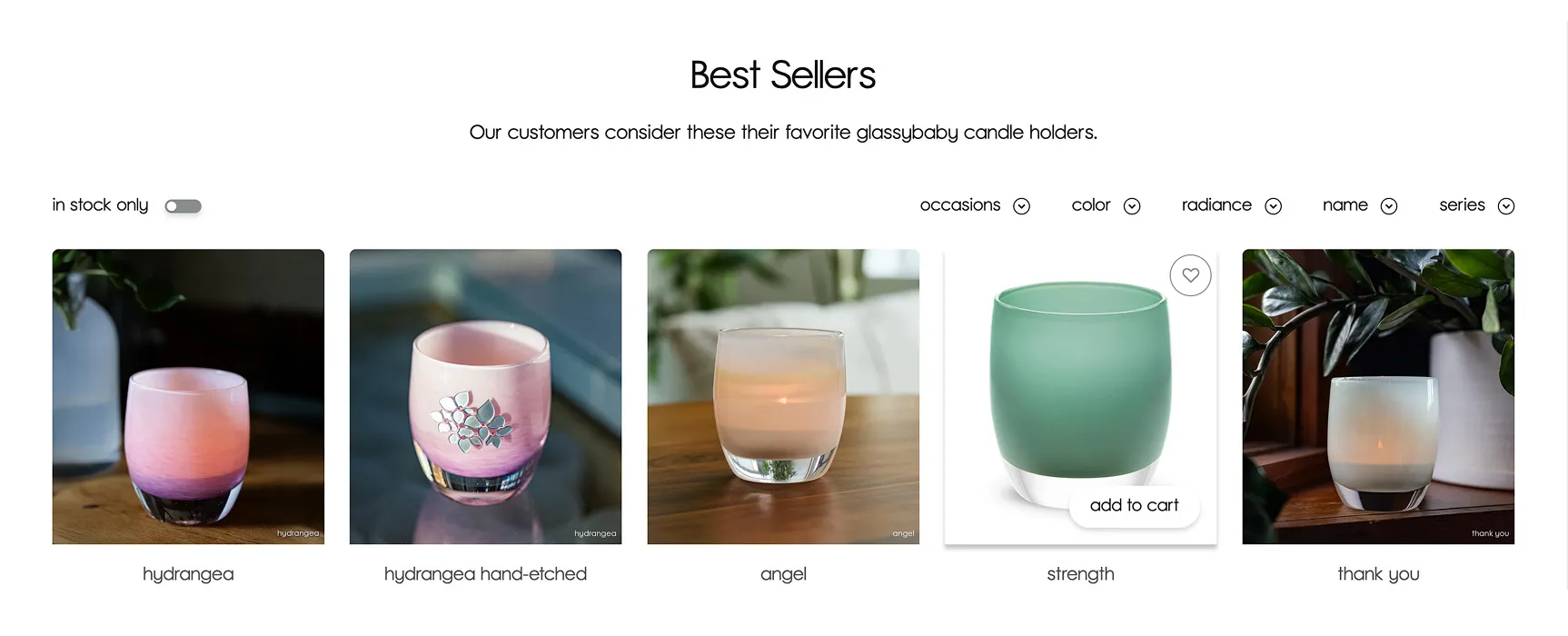
Introduced filtering where none existed — improved product findability
Expanded
UX improvements validated and rolled out across additional site areas
Brand ↑
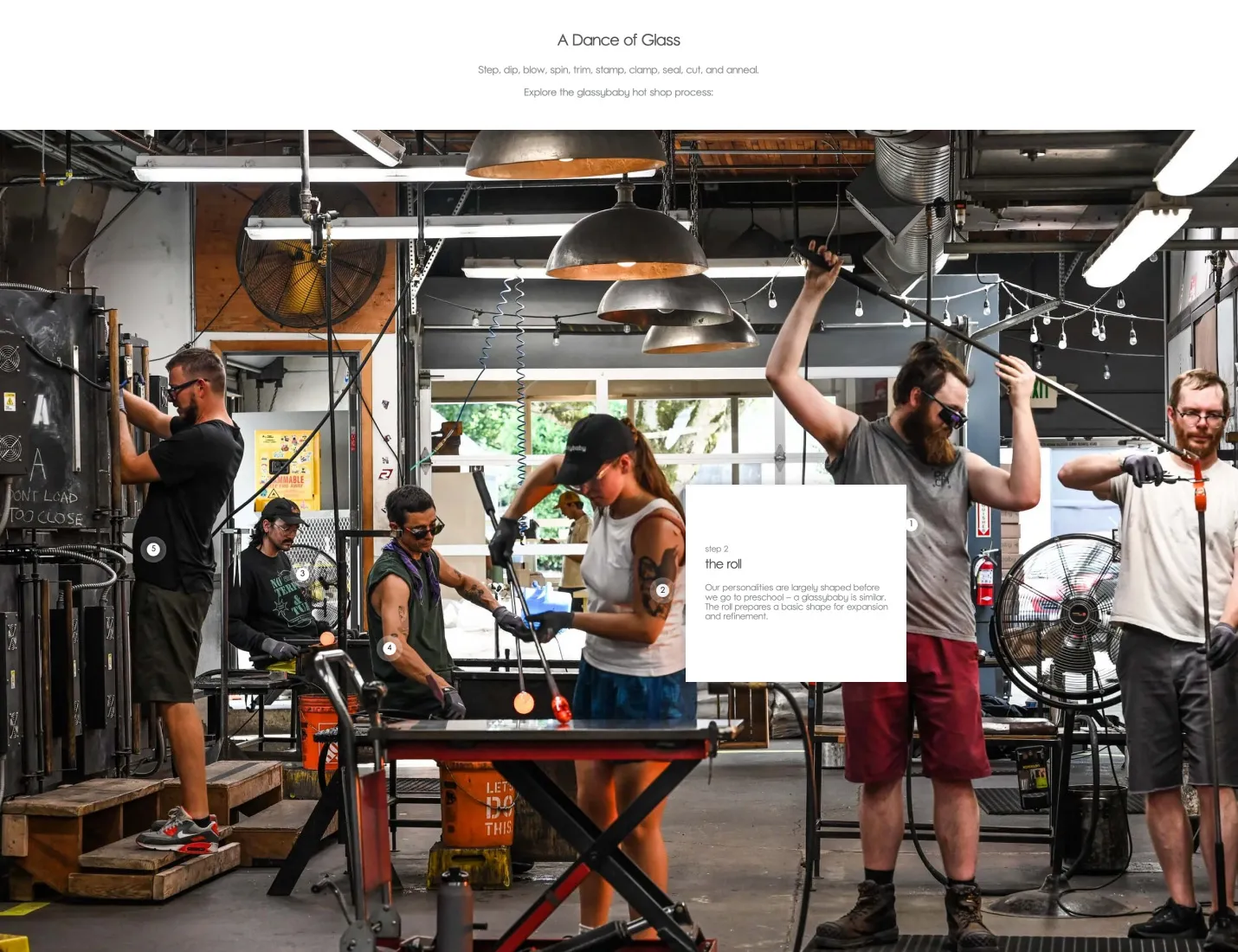
In-context photography and editorial moments introduced for the first time
The experience didn’t
match the brand.
glassybaby’s products carry real emotional weight — gifting, ritual, memory. The site didn’t reflect any of that.
Navigation without structure
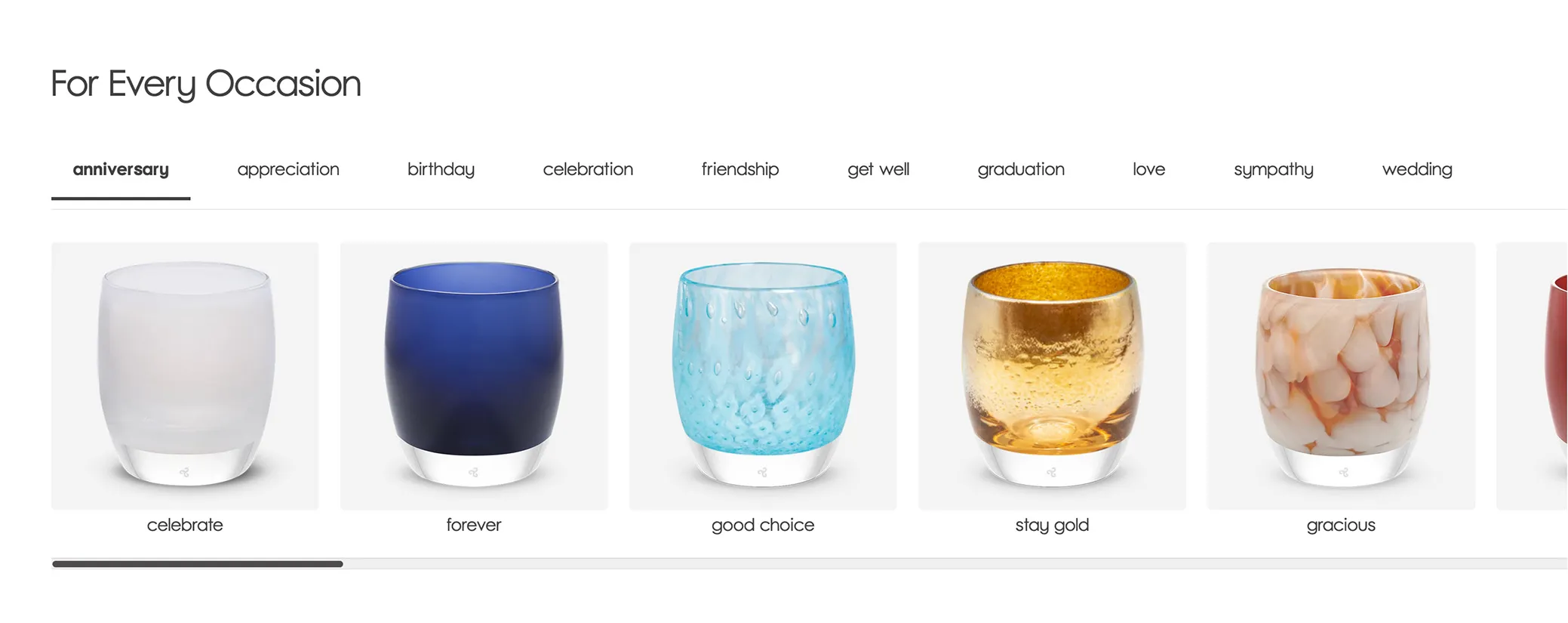
A flat nav with no clear hierarchy. Users couldn’t tell where to start, and the categories didn’t reflect how people actually shop for gifts or occasions.
No way to filter or sort
Product grids with no filtering meant users scrolling through everything to find what they were looking for. For a catalog of handcrafted items, that’s a conversion killer.
Photography not doing its job
Products shown in isolation — not in the context of the moments they’re meant for. The emotional story wasn’t being told anywhere in the browse or discovery experience.
Flow didn’t build confidence
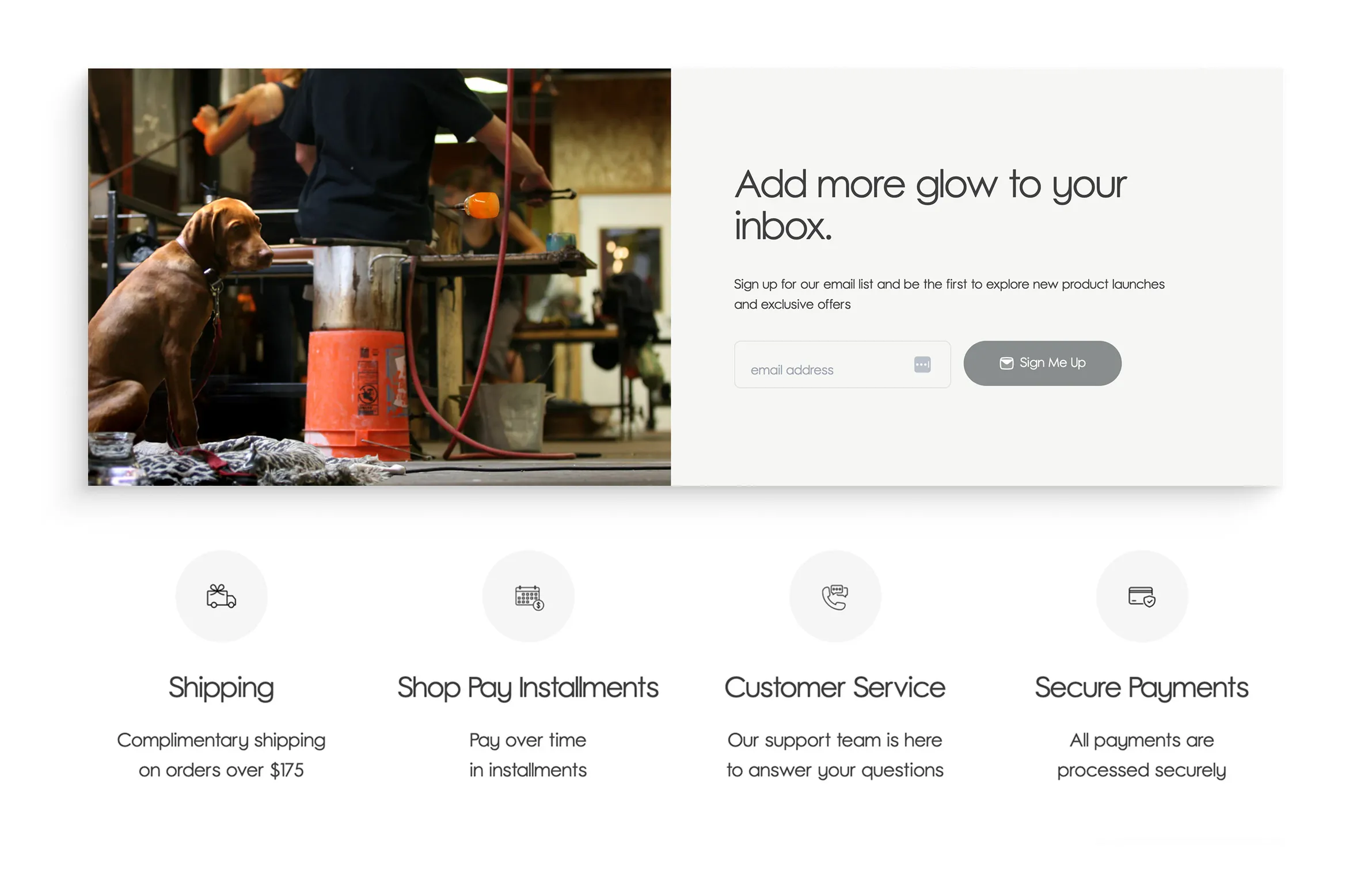
Trust signals, engagement moments, and the path from discovery to purchase were all underdeveloped. Users arrived interested and left without converting.
Restructuring navigation around how people shop.


Filtered, interactive browsing.
The product grid had no filtering, lifestyle photography was static, and there was no engagement built into the shopping experience. Now it’s one connected system — filter by color or occasion, explore the craft through interactive hotspots and engage without leaving the page.